What is the Difference Between a Keloid and Regular Scars?
What Are the Advanced keloid scar treatment Options Available?
When the skin suffers an injury—whether it is a simple cut, a burn, or even an acne lesion—it initiates a natural and complex healing process. In most cases, this healing leaves a minor mark that gradually fades over time. However, sometimes the growth of tissue exceeds its normal limits, transforming the wound into a problematic growth known as a keloid.
Many people confuse regular scars with a true keloid scar, which often leads to adopting inaccurate remedies and delaying proper clinical care. In this comprehensive medical guide, we review the fundamental differences between scar types and their causes, focusing on the advanced options available for professional keloid scar treatment according to the latest approved protocols at Elite Body Home Clinics in Dubai.
Managing a persistent keloid scar requires a customized and strategic therapeutic approach due to its resistant nature and high recurrence rate (the tendency to return after removal). At Elite Body Home in Dubai, our dermatologists rely on integrated, case-specific plans aimed at reducing the size of the keloid, alleviating discomfort, and improving overall skin appearance through these advanced modalities:
Intralesional Corticosteroid Injections
This is widely considered the standard first-line choice in non-surgical keloid scar treatment. The medication is injected directly into the dense scar tissue to significantly reduce inflammation and inhibit excessive collagen production. This process helps in flattening the keloid scar, making it softer, and effectively relieving the localized itching and pain.
Laser Therapy for keloid scar treatment
Advanced laser technologies (such as Pulsed Dye Laser - PDL or Fractional CO2 Laser) are highly effective components of modern keloid scar treatment. The laser precisely targets the micro-blood vessels supplying the overdeveloped tissue. This helps reduce redness, smooth out thick textures, and improve the elasticity of the surrounding skin area.
Cryotherapy
This technique relies on utilizing liquid nitrogen to freeze the keloid tissue from the inside out. Freezing leads to cellular destruction of the overactive cells and shuts down the blood vessels feeding them. It is frequently combined with localized corticosteroid injections to achieve optimal success rates for smaller or newer scars.
Surgical Excision with Preventive Therapy
In cases where the keloid scar is remarkably large or causes functional movement restrictions, surgical removal may be recommended. However, surgery is never performed as a standalone keloid scar treatment, since the recurrence rate after surgery alone can reach up to 80%. Therefore, our surgeons immediately combine excision with preventive cortisone injections or specialized silicone garments to ensure the area heals flat.
Topical Silicone & Pressure Therapy
Medical-grade silicone sheets or gels, along with customized pressure garments, are essential preventive measures following clinical procedures. Constant superficial pressure and deep hydration help regulate the ongoing collagen remodeling process, stopping any recurring keloid formation before it starts.
Fundamental Differences Between a Regular Scar and a Keloid
The way human skin reacts during wound healing varies from person to person based on genetic and environmental factors. Understanding these distinct responses helps our specialists determine the exact pathway for your keloid scar treatment:
1. Normal and Hypertrophic Scars
-
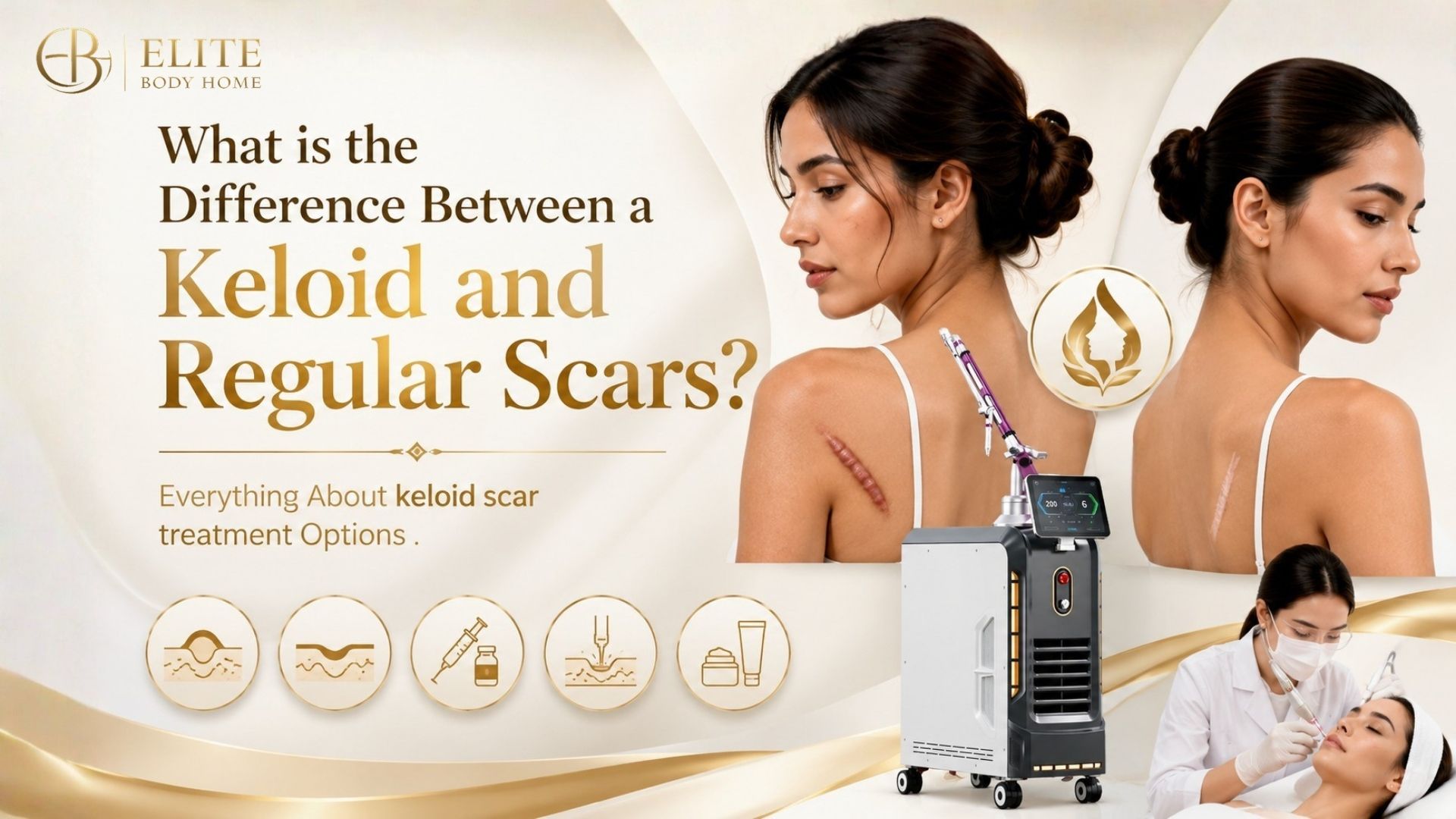
Normal Scar: Starts slightly pink and raised, then naturally becomes flat and lighter in color over the months, remaining strictly within the boundaries of the original wound.
-
Hypertrophic Scar: It rises above the skin surface and looks red, but unlike a keloid, it never exceeds the boundaries of the original wound. It usually begins to shrink and improve spontaneously over time without requiring complex medical intervention.
2. True Keloids
A keloid scar represents an aggressive overreaction of the skin's healing mechanism, where the body continues to produce structural proteins in massive amounts even long after the wound has completely closed. It features the following characteristics:
-
Exceeding Boundaries: It grows continuously and extends beyond the edges of the original injury, invading the surrounding healthy skin.
-
Firm Texture: It feels raised, thick, firm, or rubbery to the touch, with a color ranging from pink and deep red to darker hyperpigmented tones.
-
Associated Symptoms: A growing keloid often causes severe itching, tenderness, or sharp pain when pressed, and it can progress for months or years without stopping on its own.
Causes of Keloid Scar Formation and Major Risk Factors
The size of a keloid is not always proportional to the severity of the initial trauma; a massive growth can develop from something as simple as a needle prick, a body piercing, or minor acne blemishes. The primary risk factors include:
Genetic Predisposition: Genetics play a crucial role; individuals with a family history of a keloid scar are significantly more susceptible to developing them after any skin injury.
Skin Type: Clinical studies indicate that people with darker skin tones have a remarkably higher probability of developing these lesions.
Anatomical Locations: The tendency for a keloid to form is much higher on specific areas such as the upper chest, shoulders, upper back, and earlobes.
Prevention and Professional Guidance for Keloid-Prone Skin
If you have skin that is prone to forming an irregular keloid scar, proactive prevention is always the most vital step before having to undergo intensive keloid scar treatment:
Avoid Unnecessary Skin Trauma: Avoid elective ear piercings, tattoos, or non-essential surgical cosmetic procedures in high-risk zones.
Immediate and Proper Wound Care: When exposed to any cut or scratch, it must be thoroughly cleansed, kept well-hydrated using medical ointments or petroleum jelly, and properly covered to minimize abnormal tissue structure.
Strict Sun Protection: Regularly apply a broad-spectrum sunscreen to recent scars. UV exposure can cause permanent hyperpigmentation, making the lesion more noticeable and prone to irritation or further growth.
Medical Note: Skin response varies from one case to another depending on the age of the scar, its location on the body, and its depth. Therefore, a direct medical consultation and a thorough assessment at the best aesthetic clinic in Dubai are the first and most essential steps in determining the most suitable and safest keloid scar treatment plan for your condition.
Why Choose Elite Body Home for Professional keloid scar treatment in Dubai?
At Elite Body Home, we combine advanced medical technology with a specialized approach to complex scar management. If you are seeking a permanent solution to persistent scarring, here is why we are the leading destination for keloid scar treatment in Dubai:
Over 25 Years of Clinical Expertise: Our DHA-certified specialists possess over two decades of experience in treating various skin types. We understand the biological complexity of keloids and provide customized protocols that go beyond standard surface treatments.
Multi-Modal Treatment Technologies: We utilize a sophisticated range of tools, including high-precision lasers, cryotherapy, and intralesional injections. By combining these methods, we target the keloid from multiple angles to ensure maximum flattening and relief.
Specialized Recurrence Prevention (SRT): Unlike general clinics, we offer advanced solutions like Superficial Radiation Therapy (SRT) for stubborn cases. This medical protocol targets overactive cells post-surgery to reduce the chance of keloid regrowth to nearly zero.
Adherence to Global ISO Standards: Your safety is our priority. We strictly follow international ISO quality standards for clinical hygiene. Every procedure is conducted in a sterile, high-caliber environment to prevent inflammation—a key trigger for keloid growth.
Dermatological Precision & Assessment: We don’t just treat the scar; we analyze your skin’s healing patterns. Our experts provide a thorough clinical assessment to distinguish between hypertrophic scars and true keloids, ensuring you receive the correct medical intervention.
Aesthetic-First Approach to Healing: As the premier aesthetic clinic in Jumeirah, we focus on restoring your skin’s natural texture. Our "minimal-trauma" techniques are designed to soften and blend the scar into the surrounding tissue for a seamless result.
Verified Clinical Reputation: With over 1,200 authentic Google reviews and a 4.8-star average, our reputation is built on successfully managing difficult skin conditions that other clinics may avoid.
Comprehensive Aftercare & Support: Keloid management requires long-term commitment. We provide detailed medical guidance on pressure therapy, silicone application, and UV protection to ensure your results remain stable and flat.
FAQs Regarding keloid scar treatment
1. Can keloid scar treatment permanently remove a keloid scar?
While keloid scar treatment can significantly flatten the scar, reduce its size, and help it blend with the surrounding skin, a complete 100% cure without any risk of recurrence is rare. Because of genetic predispositions, the main goal of keloid scar treatment is successful management, scar flattening, and preventing regrowth.
2. What is the main difference between a hypertrophic scar and a keloid when considering keloid scar treatment?
The main distinction lies in their growth boundaries. A hypertrophic scar becomes raised but remains strictly within the borders of the original wound and may regress over time. A keloid extends beyond the original wound boundaries, invading surrounding healthy tissue and rarely stops growing on its own. Accurate diagnosis is essential before starting keloid scar treatment.
3. Is surgical excision a safe option as part of keloid scar treatment?
Surgical removal alone is generally not recommended as a standalone keloid scar treatment because surgical trauma can trigger an even more aggressive healing response, resulting in a recurrence rate of up to 80%. Surgical excision should always be combined with preventive therapies such as intralesional steroid injections or pressure therapy to help keep the area flat.
4. How many sessions of keloid scar treatment are required for effective results?
The number of keloid scar treatment sessions depends heavily on the scar's volume, age, and anatomical location. Typically, patients require between 4 and 6 sessions of corticosteroid injections or laser therapy, spaced approximately 4 weeks apart, to achieve optimal scar flattening.
5. Are steroid injections used in keloid scar treatment painful?
Because keloid tissue is dense and fibrous, injections used during keloid scar treatment may cause temporary localized discomfort or a stinging sensation. To maximize patient comfort, a topical numbing cream or local anesthetic is often applied or mixed with the injection to minimize pain.
6. Why do keloids commonly form after ear piercings despite the need for keloid scar treatment?
The earlobe is highly susceptible to keloid formation. Continuous localized trauma and low-grade irritation caused by jewelry can overstimulate the healing mechanism, leading to excessive collagen production and the formation of a firm keloid nodule that may later require keloid scar treatment.
7. Can laser-based keloid scar treatment improve redness and discoloration?
Yes, advanced vascular lasers used in keloid scar treatment, such as the Pulsed Dye Laser (PDL), specifically target the micro-vessels feeding the keloid. By reducing excess blood supply, the laser can noticeably fade red or dark pink discoloration and improve the scar's texture.
8. Can a keloid turn into cancer if keloid scar treatment is not performed?
A keloid is completely benign. It consists solely of an overgrowth of collagen fibers resulting from an exaggerated healing response. Whether or not keloid scar treatment is performed, a keloid has no malignant potential and is considered a cosmetic or symptomatic concern.
9. How do silicone sheets support recovery after keloid scar treatment?
Medical-grade silicone sheets or gels are commonly recommended after keloid scar treatment because they provide continuous hydration and create a protective barrier over the healing skin. This environment helps regulate collagen production and encourages flatter, more organized scar remodeling.
10. Which body areas are at the highest risk of requiring keloid scar treatment?
The areas with the highest incidence of keloid formation include the upper chest, shoulders, upper back, and earlobes. Individuals with a known tendency for abnormal scarring should avoid unnecessary skin trauma in these regions to reduce the likelihood of needing future keloid scar treatment.